
Your Voice in Parliament.
Your Champion in Bristol.
Bristol North West is my home. That makes being the local MP extra special. In 2024, I was proudly re-elected to serve my constituents as the local Labour MP for the third time.
As your Voice in Parliament, it’s my job to raise your concerns and to campaign for change. As your Champion in Bristol, it’s my job to support you, your family and our community to make Bristol the best place to live and work.
My work in Westminster
As a backbench Member of Parliment, it is my job to hold the government to account on behalf of my constituents. I do this by asking government ministers questions and speaking in debates.
I will vote each week on legislation being considered in the House of Commons, and can submit questions to ministers on your behalf.
I also make the case for securing investment and better public services in Bristol and work with our council and regional Mayor to secure investments for our city region.
In addition to this, I work on a number of policy areas. My particular focus is on the impact of artificial intelligence and climate change on national security, the UK economy, and the livelihoods of people across the country.

Darren’s official biography.

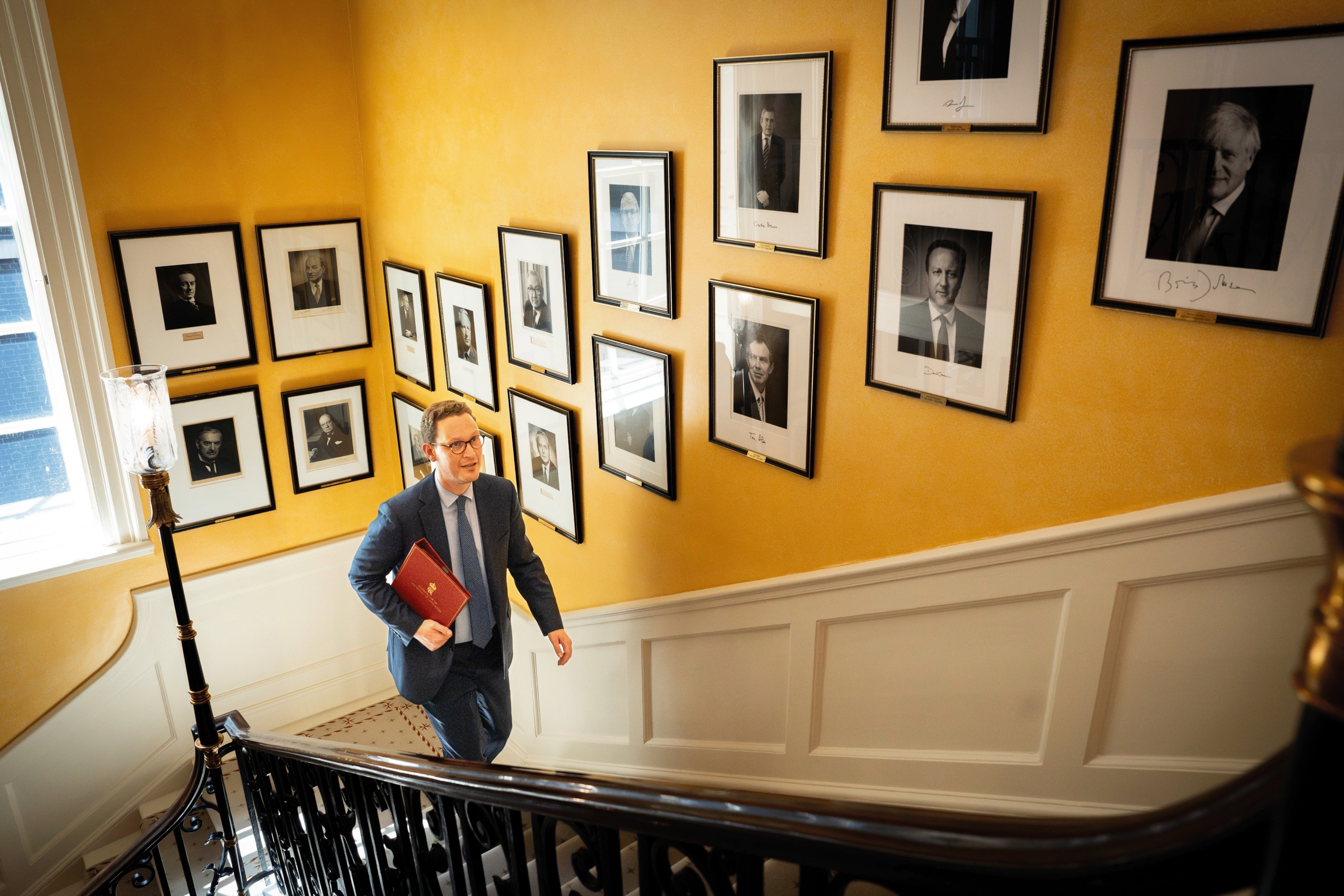
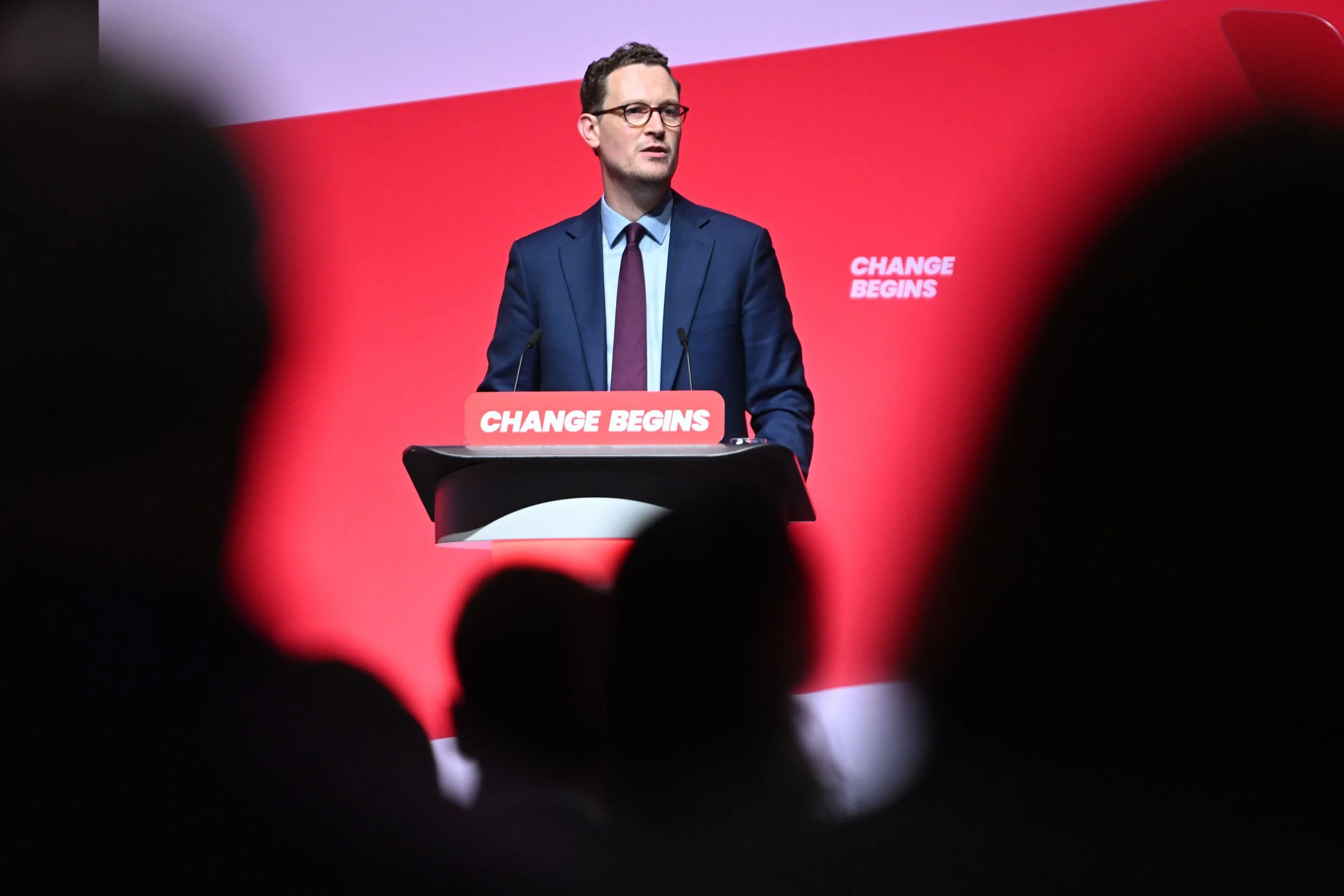
The Rt Hon Darren Jones MP is the Labour Member of Parliament for Bristol North West. He has served as a Cabinet minister as Chief Secretary to the Prime Minister, Chancellor of the Duchy of Lancaster, Minister for Intergovernmental Relations and Chief Secretary to the Treasury. Prior to entering government, Darren served as Shadow Chief Secretary to the Treasury and Chair of the House of Commons Business Committee.
Current focus
In addition to his duties as the Member of Parliament for Bristol North West, Darren is a leading voice on technology policy in the UK Parliament. He is currently working on the interplay between artificial intelligence, climate change and public policy - with a warning for governments and technology companies alike that their failure to properly understand the impact of these macro trends on the public will result in a populist backlash that will undermine their work and collective wealth creation. Darren has worked with the OECD, the UN and other multi-lateral organisations on artificial intelligence policy and its impact on the economy, national security, and public services.
Chief Secretary of the Prime Minister
Darren most recently served in government, as the youngest member of the Cabinet, as Chief Secretary to Prime Minister Sir Keir Starmer. In this role, Darren deputised for the Prime Minister as the first and (currently) last minister to work directly in No10 other than the Prime Minister. He worked with special advisors and officials to improve the functioning of the Downing Street operation and was one of a small number of people at the heart of the Keir Starmer administration.
Chancellor of the Duchy of Lancaster
As Chancellor of the Duchy of Lancaster Darren led the Cabinet Office - with a focus on policy, delivery, and communications reform at the centre of government - and was a member of the National Security Council. He chaired the Defence Oversight Board, led on national resilience and civil contingencies and was the decision maker for economic cases subject to the National Security and Investment Act.
Darren had a particular focus on building the government’s capacity to understand and mitigate artificial intelligence related and critical supply chain risks. He led the government’s digital ID program as a route to digitising public services and sponsored the No10 Innovation Fellows scheme. Darren also established the Office for the Impact Economy, matching philanthropic and social capital with public funds for social good.
Minister for Intergovernmental Relations
As Minister for Intergovernmental Relations, Darren assisted the Prime Minister with the UK Government’s relationship with the Devolved Governments in Scotland, Wales and Northern Ireland and deputised for the Prime Minister at the British-Irish Council.
Chief Secretary to the Treasury
Darren previously served as Chief Secretary to the Treasury - deputising for the Chancellor of the Exchequer and leading on the UK Government’s £1.4trn annual public sector budget. He led the first zero based and multi-year spending review for over a decade, and as the lead minister for oversight of infrastructure delivery across government, established the National Infrastructure and Service Transformation Authority (NISTA) and published the UK’s 10 year Infrastructure Strategy.
He led for HM Treasury on the turnaround project for HS2, taking a new approach to ‘mega projects’ and new towns, the development of public-private partnerships and the increased used of government debt and equity financing models to deliver key infrastructure.
HM Opposition
Prior to joining government, Darren served as Shadow Chief Secretary to the Treasury and as Chair of the House of Commons Business, Energy and Industrial Strategy Committee - which brought him to public prominence with millions of views of his weekly grilling of government ministers and CEOs. He won a number of awards for his work as chair of the committee.
Dubbed one of the Labour Party’s ‘best communicators’ Darren was one of the most used voices in the national media during the 2024 General Election campaign and has been a prominent voice for the government at its most important moments - from budget days to crisis management responses.
Personal background
Darren was born at Southmead Hospital in the 1980s and grew up in Lawrence Weston and Shirehampton in his now constituency of Bristol North West.
He attended his local state comprehensive school - Portway Community School - which, as a failing school, become one of Tony Blair’s first academy schools. He continued his education at the South Bristol Post-16 Centre at Ashton Gate school before reading human bioscience at Plymouth University, with a focus on immunology. He worked in the NHS and, following his graduation, was elected President of Plymouth Students’ Union.
Darren subsequently read law at the University of the West of England and the University of Law, training as a solicitor at law firm Womble Bond Dickinson LLP. He specialised in commercial and consumer law and worked in the energy and technology sectors.
Darren is married to Lucy and has three daughters.
Political background
Darren first ran for Parliament in 2010 as a Labour candidate in the Conservative safe seat of Torridge and West Devon. He was selected in 2012 to contest the marginal seat of Bristol North West, moving the Labour Party from third to second place in the 2015 election. Darren was first elected to Parliament as the Member for Bristol North West in the 2017 election - an unexpected victory - before being re-elected two more times in the 2019 and 2024 General Elections. The 2024 General Election saw Darren secure the largest ever majority in the Bristol North West constituency.
My income and office costs:
You don’t just vote for your Member of Parliament, you pay for them too. That’s why I’ve always published my income and office costs on my website - so you can see everything with complete transparency. You can check individual costs by clicking the ‘office costs in detail’ button below.
MP Pay
The Independent Parliamentary Standards Authority sets MPs’ pay.
As of April 2026, I am paid £98, 559 per year to serve as your MP.
As Chief Secretary to the Prime Minister and Chancellor of the Duchy of Lancaster, I was paid an additional £67,505.
I don’t currently have any external second jobs or income.
Sometimes, I receive sponsorships or donations that organisations or individuals give to me to support my work. These are always declared.
Office Costs
In order to serve you, I am given a fixed budget each year to cover my office costs. For 2025/26, these budgets include:
Staff budget - £263,370
Office budget – £35,930
London budget - £53,650
Transport budget - £uncapped, subject to rules
The London budget is used to pay for rental accommodation, which my family and I use during the working week. This is because I am expected to be in London from Monday to Thursday each week.